
Fast Delivery! Order in-stock items before 7 p.m. CST Monday thru Thursday - get the next day!
loading content
Bussmann Series LPJ-500SP
Bussmann Low-Peak LPJ-500SP Current Limiting Time Delay Fuse, 500 A, 600 V AC/300 V DC, 300/100 kAIC Interrupt, J Class, Cartridge Body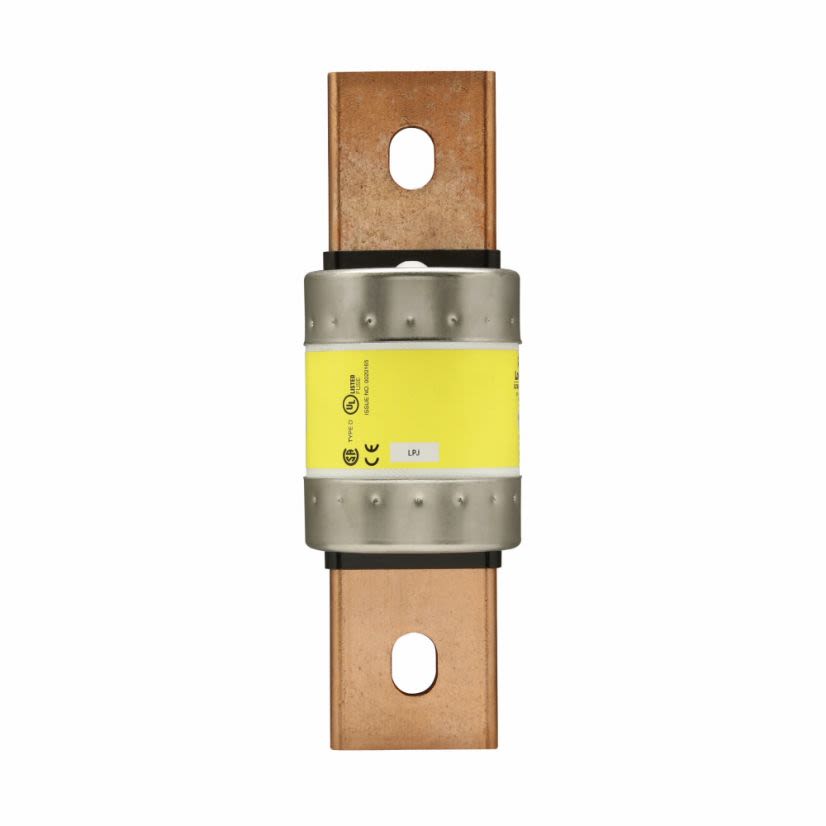
Bussmann Series LPJ-500SP
Bussmann Low-Peak LPJ-500SP Current Limiting Time Delay Fuse, 500 A, 600 V AC/300 V DC, 300/100 kAIC Interrupt, J Class, Cartridge BodyIn Stock: 3more info
|
BrandBussmann Series
MFG #LPJ-500SP
Werner Part #22671
UPC051712522861
In Stock: 3more info
|
BrandBussmann Series
MFG #LPJ-500SP
Werner Part #22671
UPC051712522861
Product Description
Bussmann Low-Peak Fuse, Current Limiting Time Delay, Series: LPJ, Indicating/Non-Indicating: Non-Indicating, Rejection/Non-Rejection: Non-Rejection, 500 A, 600 V AC/300 V DC, 300/100 kAIC Interrupt, Class: J, 10 s at 500% Response, Bolted Blade End Terminal, Holder Mount, Cartridge Body Type, Dual Element, Melamine, 2.6 in Dia x 8 in L Body Size
Attributes
Documents
Applications
Features
Attributes
Body Size2.6 in Dia x 8 in L
Body TypeCartridge
ClassJ
Country of OriginSri Lanka
ElementDual
Indicating/Non-IndicatingNon-Indicating
Interrupt Rating300/100 kAIC
ManufacturerEaton
MaterialMelamine
Mounting TypeHolder
Rejection/Non-RejectionNon-Rejection
Response Time10 s at 500%
SeriesLPJ
Terminal TypeBolted Blade End
Type / StyleCurrent Limiting
Voltage Rating600 V AC/300 V DC
Documents
Applications
Industrial Facilities and Factories, Safety and Security Systems, Branch Circuit Breaker, Panelboard Mains, Machinery Disconnects and Power Panelboard Applications
Features
- Separate overload and short circuit elements provide time delay for sizing of high inrush loads linked with class J current limitation
- Selective coordination ratio of 2:1 (within Low-Peak fuse family) prevents electrical shutdowns from extending beyond the failed circuit
- Series combination ratings with branch circuit breakers allows broad range of coverage, independent of breaker manufacturer
- Proper sizing can provide "no damage" type 2 co-ordinated protection for NEMA and IEC motor controllers
- Space saving package for equipment downsizing
- Industry's only UL listed and CSA certified fuse with a 300 kA interrupt rating that allows for simple, worry-free installation in virtually any application
- Fast short circuit protection and dual element, time delay performance provide ultimate protection
- Reduces existing fuse inventory by up to 33% when upgrading to Low-Peak fuses
- Consistent 2:1 ampacity ratios for all Low-Peak fuses make selective co-ordination easy
- Long time delay minimizes needless fuse openings due to temporary overloads and transient surges
- Current limitation protects downstream components against damaging thermal and magnetic effects of short circuit currents
- Dual element fuses have lower resistance than ordinary fuses so they run cooler
- They can often be sized for back up protection against motor burnout from overload or 1 ph if other overload protective devices fail